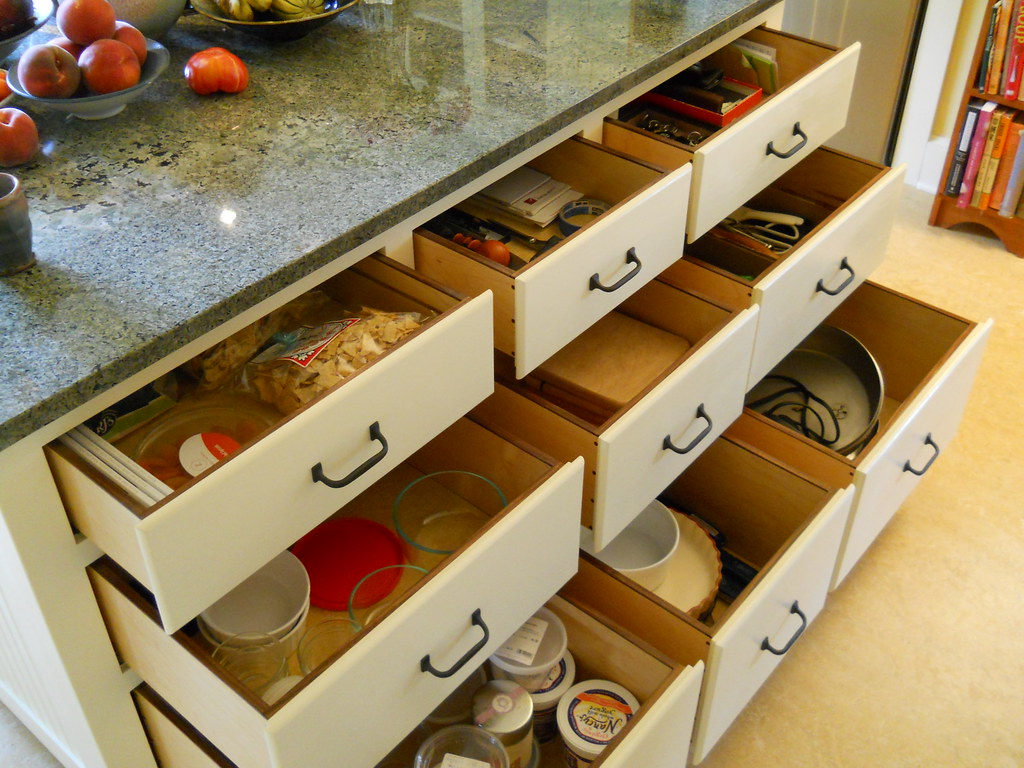
There is a low drawer in the kitchen of the Murray family of Stockbridge, Edinburgh, that the children, ages five and eight, have been allowed to open without permission since 2024. It contains four small baskets. The baskets contain crackers, fruit pouches, rice cakes, and dried apricots.
The drawer is at the children's height. It is the third drawer down in a set of pine cabinets the family inherited from the previous owners. The drawer was previously for tea towels.
The mother, Cara Murray, said the move came after a year of saying no to snack requests roughly twelve times a day. I was the snack gatekeeper, she said, in the kitchen on a Tuesday afternoon in May. It was exhausting. I had no other identity. I was the no.
The drawer was a friend's idea. The friend, a child psychologist named Iona, had set up something similar in her own home and had been quietly insufferable about it for months.
Cara resisted for a long time. She believed, in the way many parents believe, that controlling access to snacks was part of her job. Letting the children open the drawer whenever they wanted felt, she said, like a small surrender.
The rules of the drawer. The Murrays settled on four rules. One: only the drawer. Other cupboards remained adult-managed. Two: only between meals, not within thirty minutes of dinner. Three: one item per visit, and the wrapper or peel had to be thrown away or composted before another item could be taken. Four: water was always available from the tap, also at child height.
The rules were explained to the children on a Saturday morning in February 2024. The eight-year-old, Iona Murray (named, the family insists, before the friend), nodded gravely. The five-year-old, Hamish, immediately opened the drawer and took two rice cakes. The first negotiation began before lunch.
The first week. Iona, the daughter, took five items on the first day. She took four on the second. By the third day, she was taking two or three.
Hamish took, in the first three days, approximately fourteen rice cakes. His mother counted, with some alarm. On the fourth day, he took eleven. On the fifth, six. By the second week, he was taking three or four items a day, usually a rice cake and a fruit pouch and a piece of dried fruit.
Cara had braced for an escalation that did not come. The children, given access, did not gorge. They snacked roughly as often as they had snacked before, perhaps slightly more, but they stopped asking. The asking, she realised, had been the worst part.
Two more families. The writer visited two other Edinburgh families who had set up similar arrangements. The Patel-Brown family in Morningside, with three children ages three, six, and ten, used a low cupboard rather than a drawer. The Lindqvist family in Leith, with a single seven-year-old, used a wooden tray on a low shelf.
The rules differed in detail. The Patel-Browns required the three-year-old to ask before opening the cupboard, on the grounds that she could not yet manage a wrapper. The Lindqvists, with only one child, had no time-of-day restriction at all. The seven-year-old, Edith, was trusted to know when she was actually hungry.
Edith's mother, Sigrid, said: she has never once eaten a snack right before dinner. She knows it will ruin her appetite. She does not want to ruin her appetite.
The writer notes, without comment, that not all seven-year-olds are like Edith.
What goes in the drawer. The contents of the three families' snack arrangements were similar. Rice cakes were universal. Fruit pouches were in all three. Crackers, in two. Dried fruit, in all three.
None of the families included sweets in the drawer. Sweets remained in a higher cupboard, dispensed by adults. None of the families included crisps. The Murrays had tried crisps for one week in March and had returned to non-crisp items after Hamish ate two bags before lunch.
Cara was philosophical about it. The drawer works because what's in it is okay to have a lot of, she said. If I put chocolate in there, it would not work. That is information.
The bigger picture. The writer asked the three families what had changed, beyond the drawer itself.
The Murrays said the household was quieter. There was less low-grade negotiating throughout the day. Cara said she felt, for the first time in years, that she was not the kitchen's sole logistics manager.
The Patel-Browns said the three-year-old had become more confident about asking for what she wanted, because the answer was usually yes.
The Lindqvists said that Edith had started, around the third month, to take snacks for other people. She would bring her father a rice cake when she got one for herself. This had not been instructed. It had emerged.
A caveat. The drawer is not a solution for every family. The writer spoke briefly with a fourth household whose drawer experiment had failed. In that home, the children were eight and ten, and they had eaten almost everything in the drawer within three days, regardless of what was in it.
The family had retired the drawer after a month. The mother, who asked not to be named, said: I don't know what I learned. Maybe just that my kids are different. Maybe just that I should not have read so many articles.
Which is, the writer thinks, the truest sentence in this report.