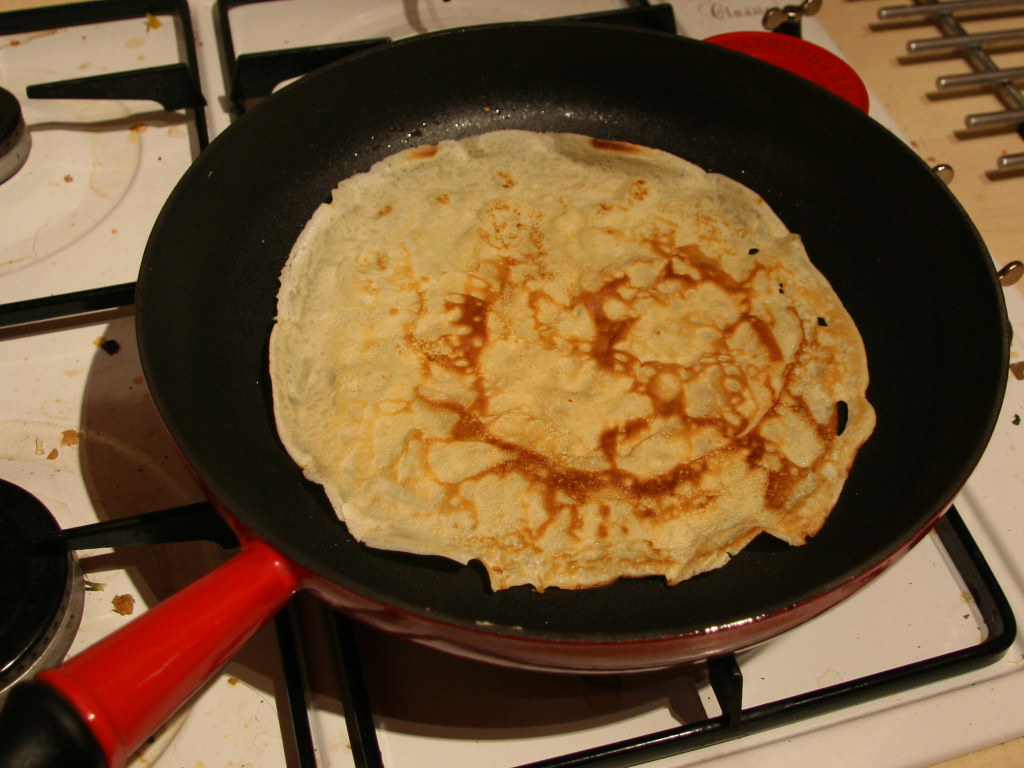
Every Saturday morning since the spring of 2019, in a third-floor apartment in HSR Layout, Bengaluru, Mahesh Iyer has made pancakes for his daughter Arundhati. He began the ritual when she was four. She is now eleven. The pancakes have not, in seven years, ever been entirely the same.
Mahesh, an electrical engineer at a mid-sized renewables firm, is not by background a cook. His wife, Vidya, a doctor at a public hospital, does most of the household cooking. The Saturday pancake was, from the start, the one meal Mahesh would make. He proposed it, originally, to give Vidya an hour on a Saturday morning.
Vidya now uses the hour to walk in Cubbon Park. She has been doing so for seven years.
The pancake recipe Mahesh uses comes from a small Australian cookbook a colleague left in the office kitchen in 2018. He photocopied the page. The photocopy is now laminated. The recipe calls for plain flour, baking powder, sugar, salt, an egg, milk, and melted butter, in proportions Mahesh has never deviated from.
The deviation, week to week, is in the execution.
Some Saturdays the pan is too hot and the pancakes scorch. Some Saturdays the batter is too thick and the pancakes come out heavy. Some Saturdays Mahesh, who in seven years has not bought a kitchen scale, eyeballs the flour wrong and produces a stack that Arundhati, with the directness of a child, will pronounce not as good.
The first batch in April 2019 was disastrous. Mahesh had not let the batter rest. He had used cold milk. He had attempted, foolishly, to flip the pancakes too early. Arundhati, then four, ate one and a half pancakes with a great deal of jam and asked, politely, if the next Saturday could be cereal.
It was not cereal. The next Saturday Mahesh made the pancakes again. This time he let the batter rest for ten minutes. The results were measurably better.
What Mahesh has been doing for seven years, without quite framing it this way, is a kind of slow apprenticeship in a single recipe. He has read about it once, in a magazine, where the writer described practising one dish as the way amateur cooks improve fastest. Mahesh has chosen pancakes.
By the autumn of 2020, he had begun to understand the pan. The cast-iron skillet, a wedding gift from Vidya's father in 1997, has its hot spots. Mahesh now adjusts the heat halfway through, lowering it once the pan has come up to temperature. He uses ghee instead of butter to grease it, a substitution he made in 2021 and has not gone back from.
Arundhati's preferences have, over the years, evolved. At four, she wanted a lot of maple syrup, which Mahesh imported, expensively, from a specialty shop in Indiranagar. At six, she wanted jam. At eight, she wanted chocolate sauce. At ten, she wanted, for several months, nothing at all on the pancakes, only butter, in what Mahesh suspected was a deliberate severity. At eleven, she has returned to jam, specifically a mango jam Vidya's mother sends from Coimbatore.
The pancakes themselves are eaten in the same kitchen, at the same small Formica table, on the same set of three blue plates the family has used since Vidya and Mahesh married. The plates have small chips. They are not replaced.
Vidya, returning from her walk at around nine, eats two pancakes cold. She does not, by family agreement, comment on the quality.
There have been Saturdays when the pancake ritual was tested. The Saturday in 2021 when Arundhati had a stomach bug and could not eat anything. Mahesh made the pancakes anyway, ate two himself, and saved the rest for Vidya. The Saturday in 2023 when Mahesh was travelling for work and Vidya, against her usual practice, attempted the pancakes herself. Arundhati was charitable.
There was a stretch in early 2024 when Arundhati, then ten, declared that she did not want pancakes anymore. She wanted, instead, masala dosa, like everyone else's father made. Mahesh, who cannot make dosa, was wounded. He continued to make pancakes for himself and Vidya for three Saturdays. On the fourth Saturday, Arundhati returned to the table without comment and ate four.
The dosa request has not been raised since.
Mahesh has tried, twice, to teach Arundhati to make the pancakes. The first attempt, when she was nine, was patient and went badly. The second, when she was ten, was less patient and went somewhat better. He intends to try again this summer.
What he has come to understand, slowly, is that the ritual is not about transferring the skill. The pancake on Saturday is not a curriculum. It is a meeting place. Arundhati, who is in the early grades of adolescence, increasingly closed-mouthed about school, will sometimes say things at the Saturday breakfast table that she would not say across dinner.
Mahesh keeps a small notebook in the kitchen drawer in which he writes, very occasionally, things Arundhati has said over pancakes that he wants to remember. The notebook is mostly empty. The entries that exist are brief.
March 9, 2024: Aru asked if I think people on other planets eat breakfast.
October 12, 2024: Aru said the school librarian smells like her grandmother.
February 7, 2026: Aru said she is glad I am not good at making pancakes because it means I have to keep trying.
Mahesh, asked about this last entry, said only that he had not realised, until that morning, that the ritual was as much for him as for her. He said this in the way a man who is not given to sentiment sometimes says things, which is to say, briefly, and looking somewhere else.
The Saturday pancake the morning this article was reported was, by Mahesh's own assessment, slightly under-cooked in the centre. Arundhati ate three. Vidya, returning from her walk, ate two cold.