On a Saturday morning in May, in a small kitchen in the Indiranagar neighbourhood of Bengaluru, Aarav Iyer was offered a quarter teaspoon of mashed ripe banana. He pushed it back out with his tongue. His parents called it a success.
Aarav is six months and three days old. He has the round-cheeked seriousness of a baby who has not yet learned that food is a category. Until that Saturday, milk was simply the thing that happened when he was hungry. Now there was, on the small plastic spoon, a different thing.
His mother, Divya Iyer, is a software engineer on parental leave. She had read three books and four substacks and one printed handout from the paediatrician, Dr. Sushma Rao, before the first spoon. She knew what she was doing. She still had her phone out, recording, just in case.
His father, Karthik, had peeled the banana that morning with the particular care of a man who had been told, repeatedly, that the banana should be ripe but not too ripe. There were spots. There were not too many spots.
The recommendation in India, as in much of the world, is exclusive breastfeeding for the first six months, then the slow introduction of complementary foods. The word complementary is important. The food is, at six months, not yet a meal. It is a side note.
What the books do not always say is how small the first portions are. A quarter teaspoon, given on a tiny spoon, looks on the spoon like nothing. On the chin, where most of it ends up, it looks like a yellow smear.
Dr. Rao had told the Iyers, at the four-month check, three rules. Start with single foods. Wait three days between new foods. Watch for rash, vomiting, or sudden change. Anything else, she said, is detail.
The detail is what the books are full of. Baby-led weaning versus purees. Iron-fortified cereal versus mashed lentil. Whether to add ghee. Whether to add salt. Whether to skip honey for a year, which they would, because honey before twelve months can carry the botulism spore.
Divya had decided, after some reading, to begin with banana, then ragi porridge, then mashed avocado, then a thin moong dal kichdi without salt. The plan was written on the back of a takeaway menu and taped to the fridge. The plan would last, she suspected, about four days.
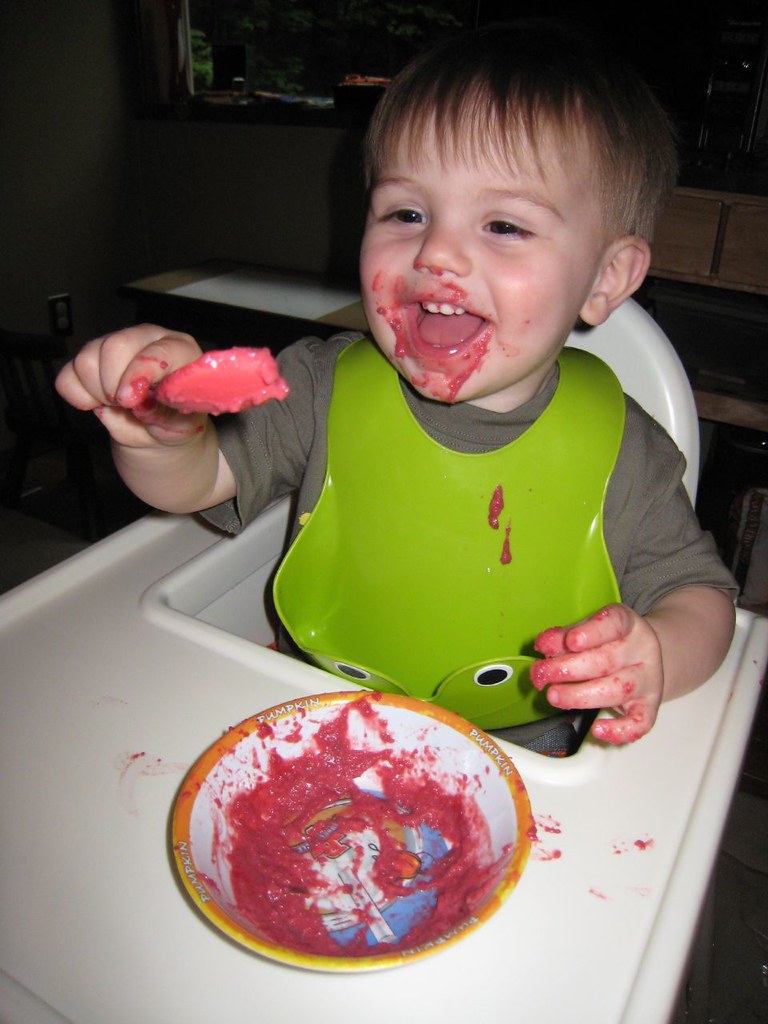
The first spoon, on the Saturday, went as first spoons go. Aarav opened his mouth. He looked surprised. The banana came out. He looked more surprised. He laughed. The banana, by now on his chin, also went on his fist, his ear, and the strap of the high chair.
Karthik wiped him down with a damp cloth. Divya offered the spoon again. This time Aarav let a little of it stay in his mouth, made the same surprised face, and swallowed. The second quarter teaspoon had become an actual transfer of calories.
There is a milestone, in paediatric nutrition, called the tongue-thrust reflex. Until about four to six months, a baby reflexively pushes solid objects out of the mouth with the tongue. It is, charitably, a survival mechanism: it keeps inedible objects from being aspirated.
When the reflex fades, the baby can swallow. The fading is not a switch. It is a slow loosening, over weeks. The pushing-out you see in the first week of solids is not refusal. It is the reflex still doing its job.
By the Tuesday, Aarav was taking half a teaspoon of banana, and on the Wednesday, two teaspoons. By the following Saturday, exactly one week in, Divya introduced ragi porridge, made thin with breast milk and a small spoon of warm water.
Ragi, finger millet, is the traditional first cereal across much of southern India. It is iron-rich, gentle on the gut, and, crucially, the colour of wet sand, which means that the eventual chin-smear photographs well.
The first ragi day was harder than banana. Aarav did not, at first, accept it. He turned his head. He frowned. He made a noise that, if it had been a sentence, would have meant: this is not what we agreed.
Divya did the thing the books all say to do, which is also the thing every mother eventually learns. She put the spoon down. She nursed him for a few minutes. She let him calm. She tried again, twenty minutes later, with two grains of ragi on the tip of the spoon. He took it.
Dr. Rao, on the ten-day phone call, said the right things. She said: it sounds like he's eating. She said: you don't have to hit a target. She said: keep nursing on demand.
She also said, more quietly: do not weigh him every week. The scale is for clinic visits. The scale is not for the kitchen.
By the end of the first month, Aarav had tried banana, ragi, avocado, moong dal kichdi, steamed and mashed sweet potato, and, on his father's birthday, a single grain of cooked rice. Nothing had caused a rash. He had not refused anything outright, except, mysteriously, the avocado.
The books do not, on the whole, prepare you for the laundry. Divya washed two bibs a day for the first three weeks. Karthik bought a second high-chair cover. The wall behind the high chair got, by week four, its first orange handprint.
What no one warns you about, Divya said, is that you fall in love with the eating. Not with any single meal. With the watching. With the small mouth opening, the spoon going in, the small mouth closing. With the fact that, after six months of being the only food in your child's world, you are now, gently, no longer the only food.
Aarav, at six months and four weeks, has eaten roughly half a banana in his lifetime. He still nurses on demand. The plan on the fridge, the one taped over the takeaway menu, has been crossed out twice and rewritten in pencil. It is, as plans go, holding up.
Filed under