Lupita Calderón is four years old. She lives in a small bungalow on Cincinnati Avenue in San Antonio with her mother, who speaks English, and her father, who speaks Spanish. She has been read to in both languages since the week she came home from Methodist Hospital.
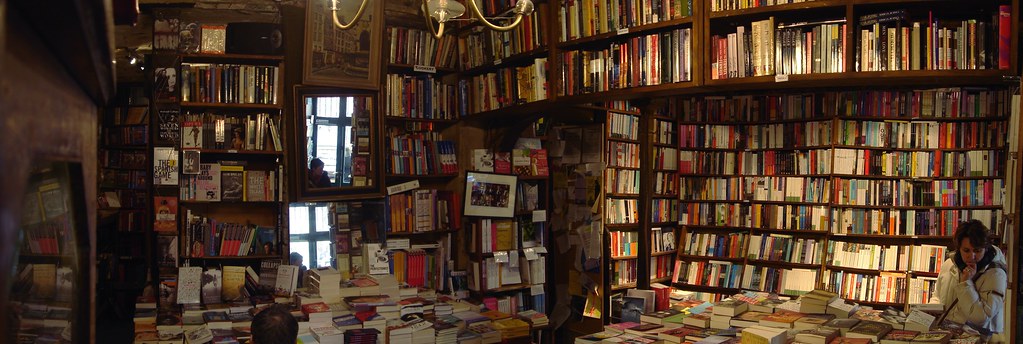
The bookshelf in her bedroom is organised by language, not by author or theme. The left side is English. The right side is Spanish. The middle, by Lupita's own arrangement at age three, is for the bilingual books, of which there are now thirty-one.
The middle shelf is where this article happens. The English and Spanish shelves are doing what they do. The bilingual shelf is doing something else.
The first bilingual book in the house was Abuela, by Arthur Dorros, with illustrations by Elisa Kleven. The text is mostly English, with Spanish words braided through it the way they are braided through the speech of the Calderón household.
Lupita's father read it the first time and said, after, that it was the first book he had read aloud in years where he did not have to switch out of one language. The book was already doing the switching.
The second was Los Pollitos Dicen, in the Nancy Abraham Hall edition. It is a folk song printed as a picture book, with translation alongside. Lupita's mother read it. She had to ask her husband what pío meant.
He laughed. He told her. She did not forget. The book did a small thing in their household that day, which was teach the English-speaking parent a word she had not known.
By age two, Lupita was choosing books for herself. She often chose the bilingual ones at bedtime, even when one of her parents was the reader, because the bilingual books felt to her like the books of the whole family.
An English book at bedtime was a book her mother had to read. A Spanish book was a book her father had to read. A bilingual book could be read by either, and she liked having the choice.
By age three, the shelf had grown to fourteen titles. La Mariposa, by Francisco Jiménez. My Diary from Here to There, by Amada Irma Pérez. Marisol McDonald Doesn't Match, by Monica Brown. Niño Wrestles the World, by Yuyi Morales.
Some of these books did what they were designed to do, which is hold a child's two languages in the same hands at once. Others did something more interesting, which is show a child that her household was not unusual.
Lupita's mother began to notice, in the third year, that Lupita was switching languages with more confidence after a session with a bilingual book than after a session in either language alone. The switch felt practiced.
Her father noticed something else. The bilingual books were teaching Lupita a kind of Spanish that was not quite his Spanish. His Spanish was northern Mexican, from a ranch outside Sabinas Hidalgo. The Spanish in many of the books was more general, more Caribbean in places, more standardised.
He did not mind. He sometimes corrected the book, gently, in the reading. He would say a word the way his mother had said it, and then read the word on the page, and Lupita would have both.
There is a thing the literature on bilingual reading does not always say. The bilingual picture book is not a teaching tool first. It is a household tool first. It tells a child whose house contains two languages that her house is a real house with real books for it.
Lupita does not need the books to learn either language. She is learning them from her parents, the way every child learns a first language. What the books give her is the experience of seeing her household, in print, with its languages in the order her household keeps them.
At four, she has begun to read a few words herself. The English ones come faster, because she is in a pre-K that uses English. Her father has started reading the Spanish parts of the bilingual books a little slower, to give her time to read along.
There are books that did not survive. A bilingual board book about counting got too easy by two and went to the donation bin. A bilingual book about a dog at the beach was so insipid in both languages that Lupita's mother quietly retired it after three readings.
The thirty-one books on the middle shelf now are the books that earned their place. Some of them are great picture books that happen to be bilingual. Some of them are mediocre picture books that did a household job and are kept for that.
A library is not a list of best books. A household library is the list of books the household actually uses. The Calderón middle shelf is a small honest accounting of what their family is, in print.
Lupita will eventually outgrow the picture book shelf. She will move to chapter books, which is the year ahead. The early chapter books in Spanish are harder to find in San Antonio than the early chapter books in English. Her father has begun to look.
What the middle shelf will become, in five years, is not yet clear. It may stay where it is, as a kind of family archive. It may move to the living room. It may shrink to its best ten.
For now, it sits between the English shelf and the Spanish shelf, as the household it serves sits between two languages, and it does the small daily work of being a bridge between them, one bedtime book at a time.